
No family plans for the day a carer ends up in hospital, a support arrangement suddenly falls through, or a home becomes unsafe overnight. Yet these moments happen across Tasmania every week, and when they do, the person you support still needs a safe bed, familiar routines and people who understand their needs.
A short-notice respite stay can bridge that gap. How smoothly it goes often depends less on the provider and more on how much information is ready when you pick up the phone. This guide explains how NDIS funding works for unplanned stays, what to put together now (before you need it), and how to help the person you care for settle in quickly.
When a Short-Notice Stay Becomes Necessary
Most respite is planned weeks in advance. Short-notice stays are different: they are arranged within days, or sometimes hours, because something has changed without warning. Common reasons include:
- a primary carer becoming unwell, injured or needing surgery
- a family emergency, such as a bereavement interstate
- an informal support arrangement breaking down
- a participant leaving hospital before their home supports are ready
- a period of increased behaviours or distress where everyone needs a circuit-breaker
Families searching for emergency NDIS respite Hobart options are usually under pressure and short on time. That is exactly why a little preparation done on a calm day pays off. It means the conversation with a provider can focus on matching the right support, rather than chasing paperwork.
How NDIS Funding Works for Unplanned Stays
Under the NDIS, respite away from home is generally funded as short-term accommodation (STA). It covers your support and accommodation for a short time away from your usual home, and gives your informal supports a break.
According to the NDIS short-term accommodation guideline, the NDIA generally funds up to 28 days of STA per year, used for up to 14 days at a time. Funding usually sits in your Core Supports budget, which gives you some flexibility in how it is used. You can read the full rules in Our Guidelines on short-term accommodation.
Before an emergency stay goes ahead, it helps to check three things:
1. Is there STA or flexible Core funding in the current plan? Your plan manager, support coordinator or the myplace portal can confirm the balance.
2. How many STA days have already been used this plan year? This affects how long the stay can run.
3. Has your situation changed for the long term? If the carer arrangement won’t return to normal, tell the NDIA about the change of circumstances so the plan can be reviewed.
If the person you care for isn’t an NDIS participant, or funding has run out, unpaid carers can call Carer Gateway on 1800 422 737 for help arranging emergency respite. The line operates 24 hours a day for emergency respite.
Your Grab-and-Go Information Pack
The single most useful thing a family can do is keep a current information pack in one place: a folder, a shared drive or a phone note. When a Hobart provider asks questions at short notice, you can answer in minutes rather than hours. Include the following:
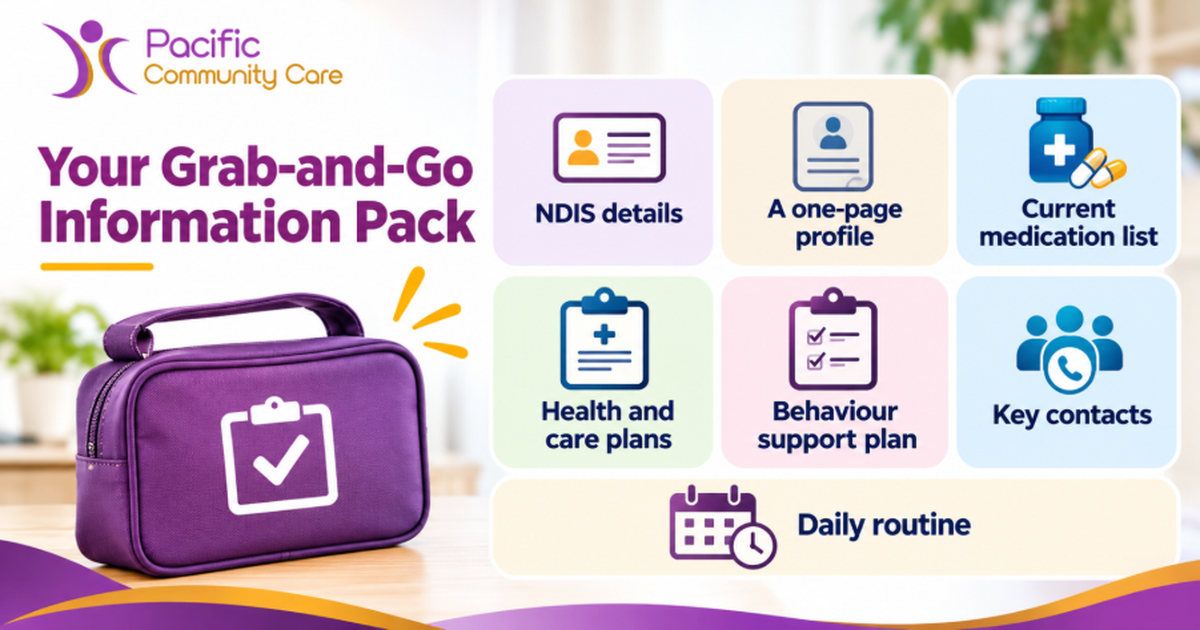
- NDIS details. The participant’s NDIS number, plan start and end dates, and how the plan is managed (NDIA-managed, plan-managed or self-managed), plus the contact details for the plan manager. The provider needs this to confirm funding and set up a service agreement quickly.
- A one-page profile. A short summary of who the person is: what they like, what upsets them, how they communicate and what a good day looks like. Staff meeting someone for the first time rely heavily on this, so keep it practical and in plain language.
- Current medication list. Every medication, the dose, the timing and the prescribing GP or specialist, along with any allergies. Ask your pharmacy for an up-to-date printout or a Webster-pak, as this reduces the risk of errors during a stay.
- Health and care plans. Any mealtime management plan, epilepsy management plan, continence plan, wound care instructions or nursing orders. If the person has high or complex health needs, these documents decide which staff and settings are suitable.
- Behaviour support plan. If a positive behaviour support plan is in place, include the latest version and any restrictive practice authorisations. The provider needs these to support the person safely and lawfully.
- Key contacts. The primary carer, a backup family contact, the support coordinator, the GP and any treating specialists. Note who can make decisions if the carer can’t be reached.
- Daily routine. Wake and sleep times, meal preferences, personal care steps and any rituals that help with transitions. Routines are often what makes an unfamiliar place feel safe.
Review the pack every few months, or whenever medication or plans change. An outdated medication list can create more problems than no list at all.
What to Pack for the Stay Itself
Once a stay is confirmed, packing for an unexpected stay can feel overwhelming. Keep a basic bag list with the information pack so whoever is helping knows exactly what to grab:
- Medication and supplies. Enough medication for the full stay plus a couple of extra days, in original packaging or pharmacy-prepared packs. Bring continence aids, feeding equipment or wound care supplies if used.
- Mobility and communication aids. Wheelchairs, walkers, hearing aids, glasses, communication boards or devices, along with chargers. Without these, a person may be unable to move safely or express what they need.
- Comfort items. A familiar pillow, blanket, photos, headphones or a favourite object. Small things from home can noticeably ease anxiety during the first night.
- Clothing for Hobart weather. Layers, a warm jacket and comfortable shoes, even in summer. Conditions in southern Tasmania can change quickly, and outings may be on the cards.
- Labelled belongings. Put names on clothing, devices and equipment. This prevents mix-ups in shared settings and makes the return home easier.
- Identification and cards. A Medicare card, concession or companion cards, and any health fund details.
Making the First Call: What a Hobart Provider Will Ask
When you contact a provider about a short-notice stay, expect questions about the reason for the stay, how soon it’s needed, how long it’s likely to last, the person’s support needs (including overnight needs), mobility and transport, health risks, and how funding will be managed. Having the information pack open in front of you makes this call much shorter.
Be honest about the level of support needed. Understating behaviours or health needs to secure a bed can lead to a placement that isn’t safe, which helps no one. A good provider will tell you plainly whether they have capacity and the right staff mix, and if they don’t, may point you to other options.
If a support coordinator is involved, let them know straight away. Coordinators often juggle several providers at once and can help confirm funding, sort transport and keep the NDIA informed while you focus on your family. Anyone looking at emergency NDIS respite Hobart services for a participant leaving hospital should also ask whether discharge support can be coordinated alongside the stay.
Helping the Person Settle In
A sudden change of place can be unsettling, especially for people with autism, intellectual disability or psychosocial disability. A few simple steps can help:
- Explain what is happening in a way the person understands, using visual supports if that helps.
- Where possible, have a familiar person accompany them on arrival.
- Share any tips that work at home, such as a calming activity before bed.
- Agree on how and when updates will be shared with family during the stay.
- Plan a debrief after the stay to record what worked and what didn’t, so the next stay goes better.
Questions Worth Asking a Provider Before You Need One
The best time to compare providers is before a crisis, when you can ask questions calmly. When reviewing emergency NDIS respite Hobart services, it helps to find out:
- whether the provider is NDIS registered, which you can check on the NDIS Commission’s provider register
- how they handle referrals outside business hours, and how quickly they usually respond
- whether staff are trained to support your family member’s health or behaviour support needs
- what happens at the end of a stay, such as a handover or written summary for your records
- whether they can link in with other supports, like support coordination or hospital discharge planning
Some providers, including Pacific Community Care, offer short-term accommodation and respite in Hobart for both planned and emergency stays, subject to capacity. Saving one or two providers’ details in your information pack now means you have somewhere to start if the call ever needs to be made.
Prepare on a Calm Day
Emergencies rarely give you warning, but your paperwork can be ready long before one arrives. Put together an information pack, keep a bag list handy, know where your STA funding stands and save your provider’s number in your phone. Should the call ever be needed, you’ll be focused on the person you care for rather than searching for documents.